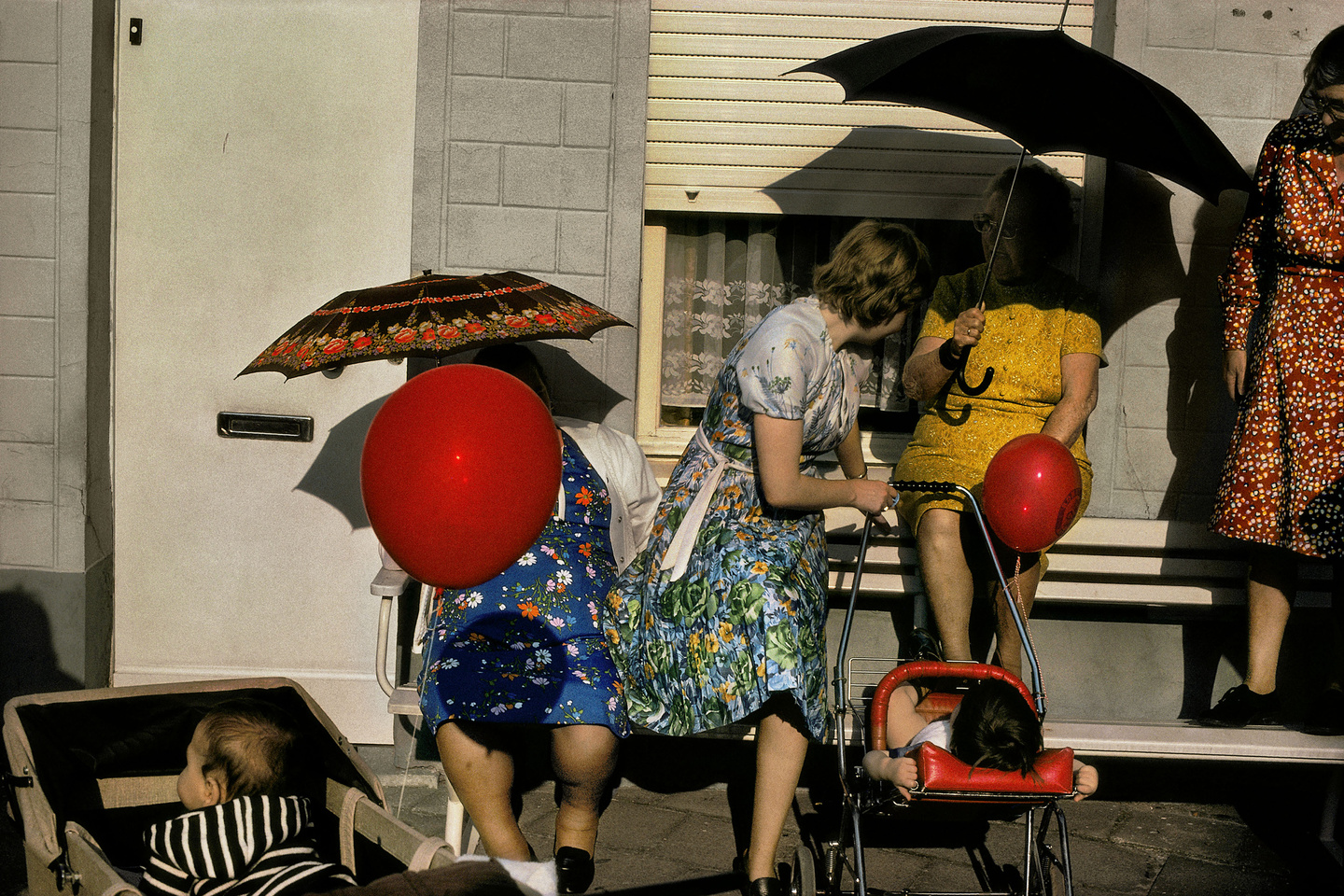
Harry Gruyaert — A Sense of Place
When Colour Becomes a Way of Inhabiting the World
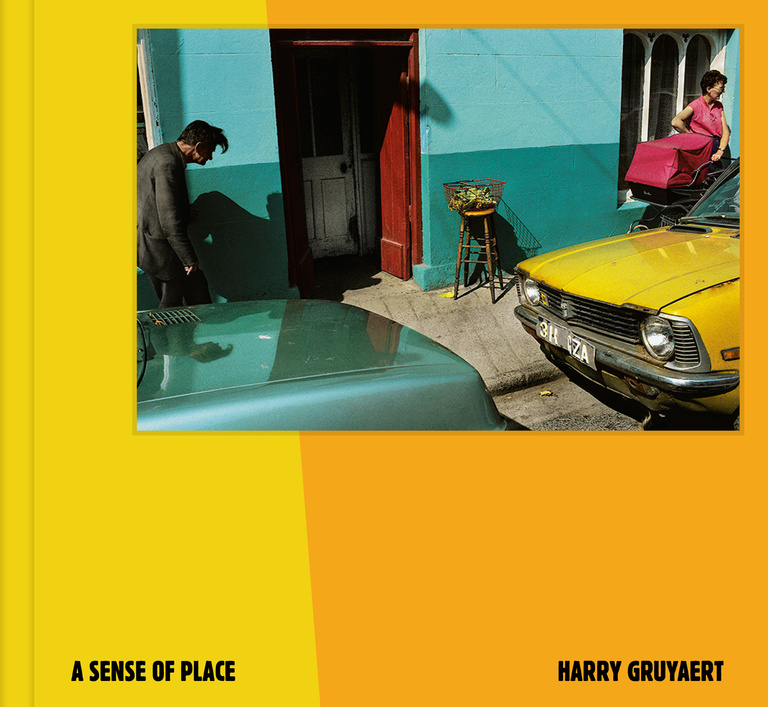
Presented alongside his major exhibition at Les Rencontres d’Arles 2026, A Sense of Place brings together decades of Harry Gruyaert’s photographic journeys through cities including Brussels, Paris, New York, Moscow, Tokyo, Mumbai and Zanzibar. Yet this publication is far from being a geographical survey. As both its title and the publisher’s introduction suggest, the book is less concerned with describing places than with capturing the sensations they evoke—the quality of a particular light, the rhythm of a street, the emotional resonance of colour and space.
This idea has always been at the core of Gruyaert’s practice. Travel, in his work, is never about collecting destinations. Instead, it becomes a way of refining one’s vision. Cities are transformed into visual landscapes where architecture, light, shadows and human presence briefly align to create photographs of remarkable balance and quiet intensity.
Since the 1970s, Harry Gruyaert has occupied a defining place in the history of colour photography. At a time when black-and-white was still largely regarded as the language of serious photographic expression, he belonged to the generation that helped establish colour as an artistic vocabulary in its own right. Yet reducing his work to colour alone would overlook what truly makes it distinctive.
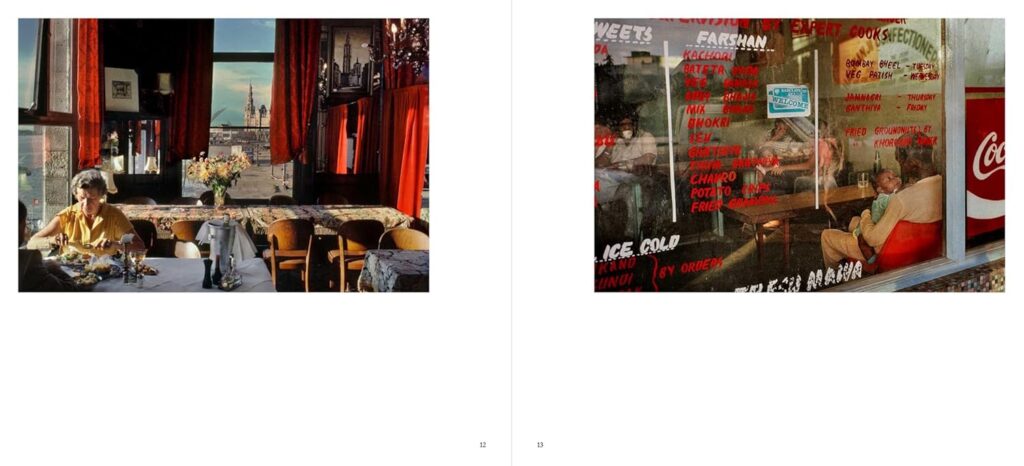
Beyond Geography — A Sense of Place and the Human Need to Belong
At first glance, A Sense of Place appears to be about geography. Cities, countries and continents unfold from one page to the next, suggesting a photographic journey across the world. Yet the longer one spends with Harry Gruyaert’s work, the more geography seems to dissolve. What remains is something far more elusive: the experience of being somewhere. This distinction is essential. A place is not simply a point on a map. It is a space transformed by experience.
Humanistic geographer Yi-Fu Tuan famously argued that space becomes place when it is lived. A place is not defined by its coordinates but by memory, emotion, familiarity and presence. We remember places not because of their architecture, but because something happened there. They become repositories of experience rather than locations. Photography has always occupied an ambiguous position within this transformation. It records physical space, yet it also has the capacity to reveal invisible layers of meaning. A photograph can preserve a street long after its buildings have changed, but more importantly, it can preserve the atmosphere that once inhabited it. Harry Gruyaert seems acutely aware of this distinction. His photographs rarely explain where they were made. They resist the descriptive impulse that has traditionally accompanied documentary photography. There is no need to identify a monument, decode a neighbourhood or recognise a skyline. Instead, the images invite us to inhabit a fleeting emotional state.
“The city becomes secondary. Perception becomes primary.”
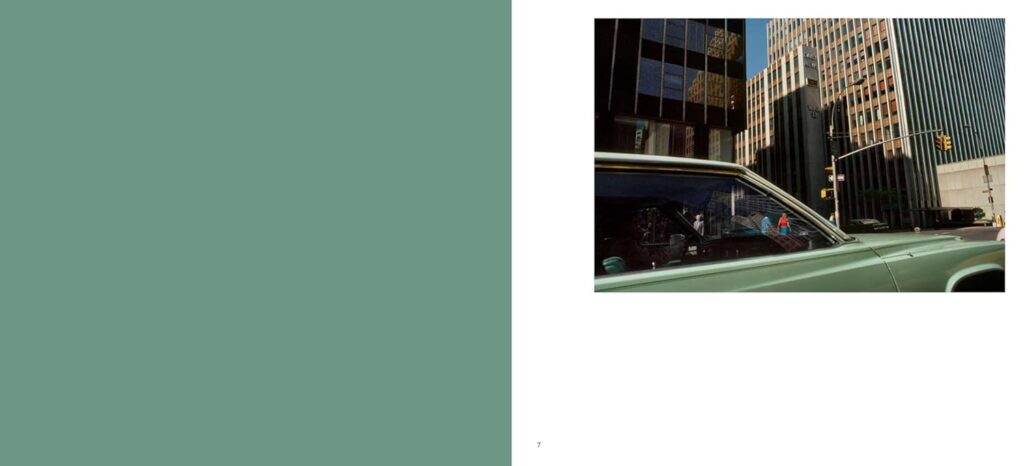
Edward Relph described this relationship through the notion of “placelessness”, warning that contemporary societies increasingly produce environments that feel interchangeable and anonymous. Airports resemble airports. Shopping centres resemble shopping centres. Cities progressively lose the singularity that once allowed inhabitants to develop a profound attachment to them.
Marc Augé later expanded this idea with his concept of the “non-place”: spaces designed for circulation rather than dwelling, where individuals temporarily coexist without establishing meaningful relationships. In such environments, identity becomes suspended. One passes through rather than belongs. Seen through this lens, Gruyaert’s photographs almost perform the opposite gesture.
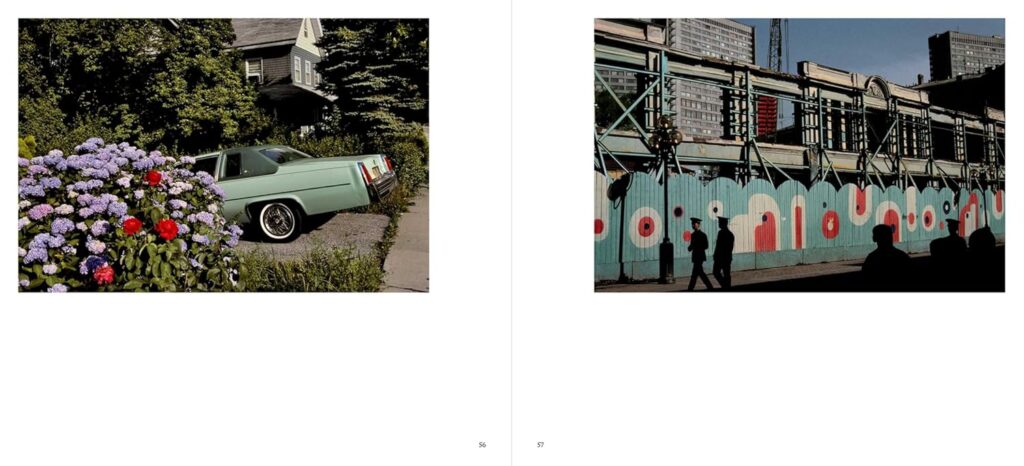
“He collects relationships between light, colour and human presence. “
He collects relationships between light, colour and human presence. Whether the image was made in Tokyo, Brussels or Zanzibar ultimately becomes almost irrelevant. What matters is the fragile equilibrium that allows a place to emerge from space. Doreen Massey argued that places should never be understood as fixed entities but as ongoing intersections of histories, movements and encounters. Places are processes rather than objects. They are constantly becoming.
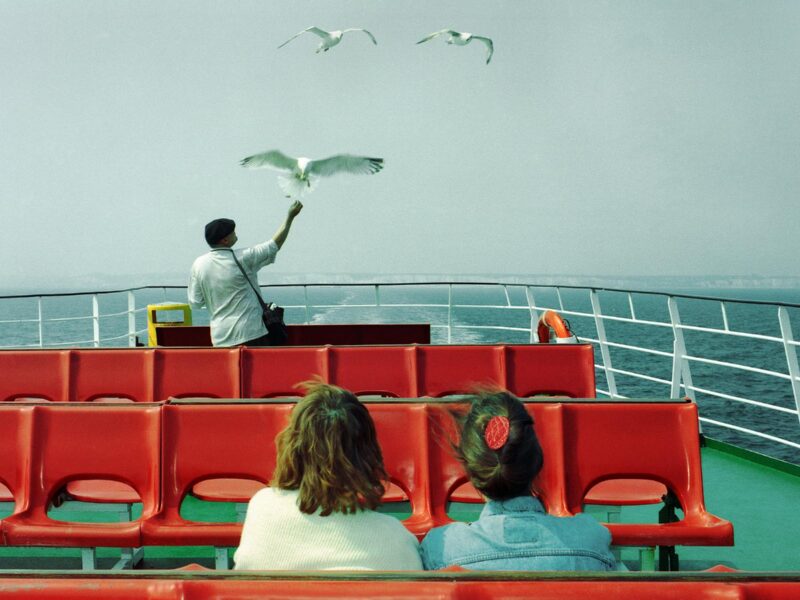
Looking through the images published around A Sense of Place, another idea gradually emerges. The locations slowly lose their geographical identity. The places themselves become secondary to the gaze that transforms them. It is perhaps the book’s most beautiful paradox: in photographing places, Gruyaert ultimately photographs a universal way of experiencing them.
His work reminds us that documentary photography is not solely about information. It is also about interpretation. About translating sensations that words alone struggle to express. Gruyaert does not photograph a city to explain it. He photographs it to communicate what it feels like to stand within it.
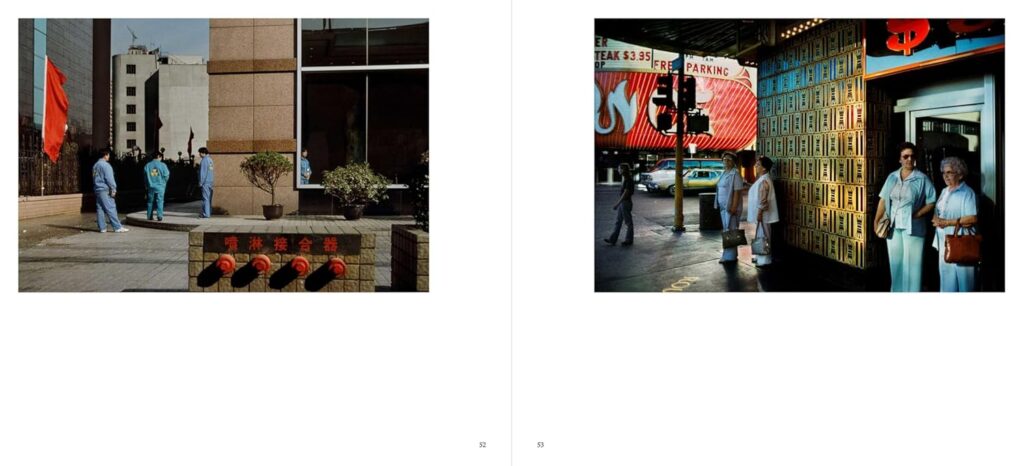
Personally, this sense of restraint is what resonates most deeply. At a time when photography often competes for immediate attention through spectacle or visual excess, Gruyaert moves in the opposite direction. His images ask for patience. They reward slow looking. Rather than overwhelming the viewer, they quietly reveal themselves over time, inviting us to notice how a simple shadow, an unexpected colour or an anonymous passer-by can transform an ordinary moment into something profoundly memorable.
In that sense, A Sense of Place perfectly complements the exhibition presented this summer at Les Rencontres d’Arles. Displayed within the Chapelle Saint-Martin du Méjan, the photographs reveal the remarkable consistency of a visual language developed over more than five decades. For those visiting Arles, the book extends the experience beyond the exhibition walls. For those unable to make the journey, it offers a compelling introduction to one of photography’s most distinctive colourists—a photographer who no longer documents places as destinations, but as lived experiences shaped by light, colour and the act of seeing itself.
by Kalel Koven
_
Book available – Sense Of Place, Harry Gruyaert.
Curation: Géraldine Lay
Artistice Advisor: Cyril Delhomme
EXHIBITION PRODUCED BY THE RENCONTRES D’ARLES.
WITH THE SUPPORT OF FLANDERS STATE OF THE ART
IN COLLABORATION WITH GALLERY FIFTY ONE, ANTWERP.
PUBLICATION: A SENSE OF PLACE, TEXTUEL, 2026.